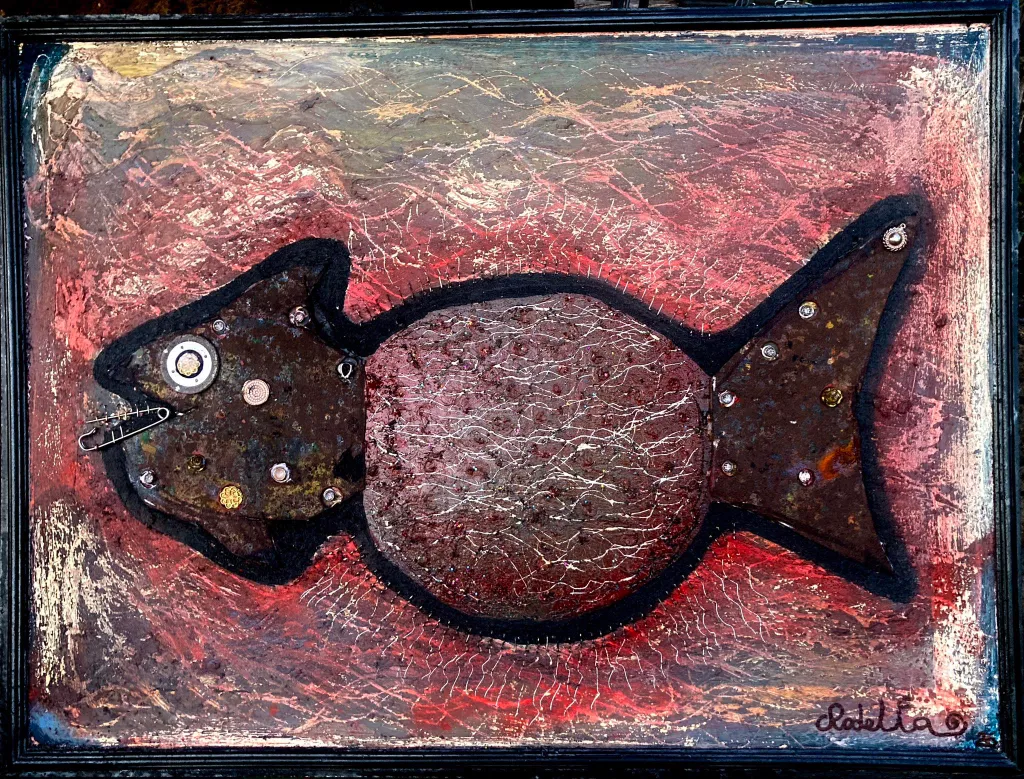
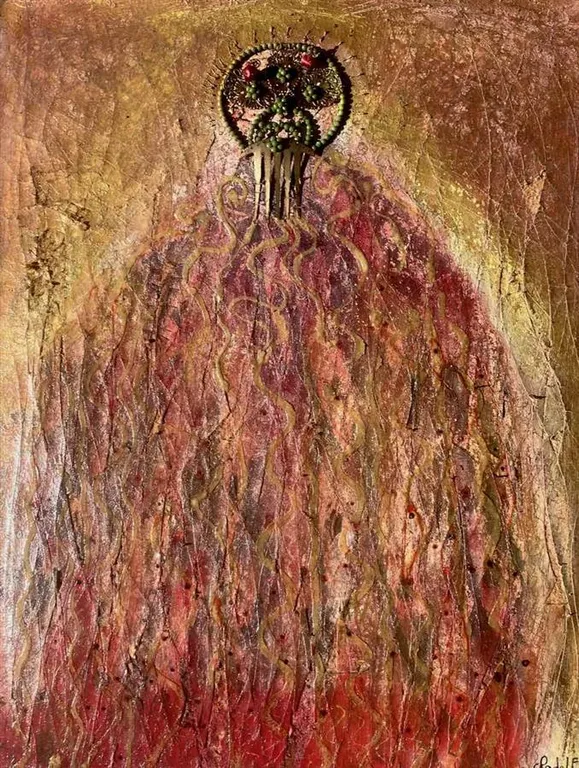
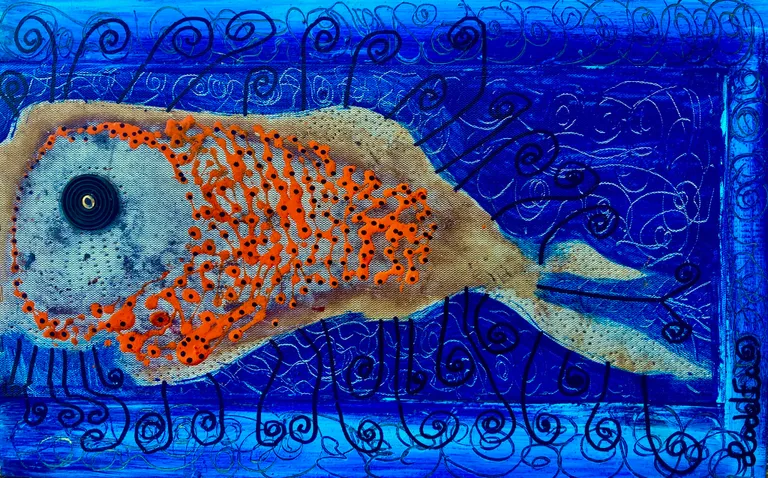
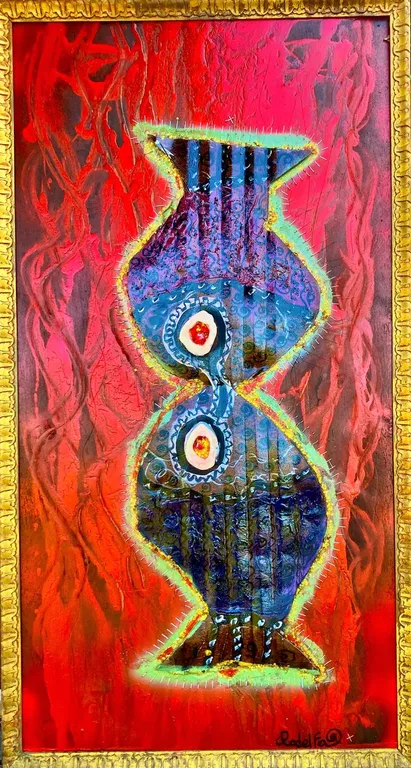
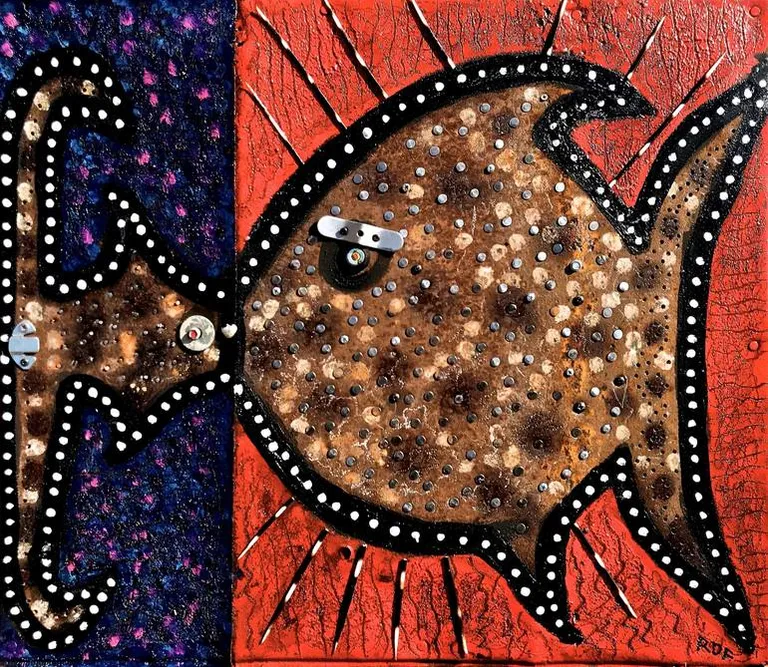
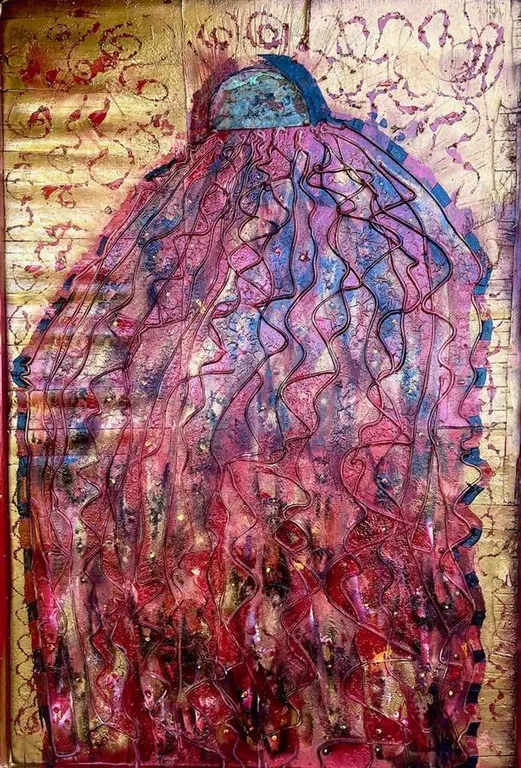
Roberto Del Fabbro is an artist who gives new life to waste materials by transforming them into fish. Through the use of recycled materials, his works explore the profound connection between nature and sustainability, combining irony, color, and environmental reflection. Fish become symbols of rebirth: what was abandoned returns to swimming, charged with meaning and imagination.
Roberto Del Fabbro develops an artistic research focused on the transformation of recycled materials, which become the building blocks of a powerful and symbolic fish imagery. Fish, a recurring subject in his work, emerge as archetypal and universal forms, evoking a reflection on the relationship between humanity, nature, and consumption. Through a material and layered language, the artist reworks waste and residue, restoring aesthetic dignity and narrative value. His works engage in a dialogue between sustainable practice and contemporary sensibility, where the artistic gesture becomes an act of
Roberto Del Fabbro articulates his artistic research through a practice grounded in the reuse and reconfiguration of waste materials, engaging with the contemporary debate on sustainability and the ethics of artistic production. The recurring and structuring iconographic motif of the fish takes on a layered symbolic value: a cultural archetype, a liminal organism, and a metaphor for a fragile ecosystem, marked by human intervention. The recovered material, removed from the cycle of consumption and obsolescence, is reworked through assembly and painting processes that highlight its memory and previous function. In this sense, Del Fabbro's work is a critical device, capable of triggering a reflection on the relationship between form, material, and environmental responsibility, positioning itself at the intersection of ecologically conscious artistic practices and contemporary languages.
Roberto Del Fabbro develops an artistic practice that interrogates matter in its historical, political, and ecological dimensions, through the reuse of waste materials removed from linear cycles of production and consumption. The fish, a central and recurring figure, emerges as a liminal subject: an organism immersed in a vulnerable ecosystem and, at the same time, a symbolic device capable of triggering a reflection on the relationship between living things, the environment, and human responsibility. The recovered material is neither neutralized nor camouflaged, but retains traces of its origin, making visible the stratification of the processes that have passed through it. In this sense, the work is situated within a perspective that recognizes matter's own agency, in which the artistic gesture takes the form of an act of negotiation between the human and the non-human. Del Fabbro's production thus presents itself as a field of tension between form and residue, image and remains, proposing a critical reinterpretation of the natural imagination in light of contemporary ecological emergencies.
Roberto Del Fabbro develops an artistic practice that embraces matter as an epistemological field, questioning its conditions of existence within contemporary regimes of production, consumption, and waste. The use of recycled materials is not a merely ethical or formal choice, but rather a critical device through which to challenge the distinction between natural and artificial, between residue and resource. The fish, a persistent iconographic subject, operates as a liminal conceptual figure: an entity immersed in a compromised environment, a body traversed by ecological, economic, and symbolic flows, and at the same time a sign of a nature no longer conceivable as an uncontaminated otherness.
And yet, despite the complexity of the context and the fragility of ecosystems, Del Fabbro's works convey a tangible and contagious joy: the capacity of matter to be reborn, of color to illuminate, of the creative gesture to transform waste into poetry. In this sense, his fish swim not only among the residues and memories of the world, but also toward a possible future, capable of reconciling aesthetics, ecology, and hope.
We believe in artists receiving
the full value of their work.
We take ZERO commission on sales.
HAND-PICKED ARTISTS
All artists featured on NAD are
carefully hand-picked by our
curation team, for highest quality.
WORLD WIDE COMMUNITY
Artists and collectors connect
— wherever they are.
No hassle, NAD takes care of it all.
CUSTOMER SUPPORT
If you have questions or need
help in any way, our support team
will reply within 24 hours.
ARTWORK WARRANTY
The artworks featured on NAD
are guaranteed genuine and
signed by the artist.
ORIGINAL ARTWORK
Only original artworks and
numbered original photography
are accepted on NAD.
Newsletter
Be the first to discover new artworks, artists and exclusive offers from New Art Day.
We only use your email address to send you our newsletter and will ask you to confirm your subscription. You can unsubscribe at any time via the link in every email. See our privacy policy.
Manage Consent
We and our partners use cookies and similar technologies (including advertising identifiers) to store and access information on your device. We process personal data (such as IP address, device ID and network identifiers) to measure site traffic, personalize content and show personalized and non-personalized ads (ads personalization). Click “Accept” to consent, “Deny” to decline, or “View preferences” to choose per category. You can change or withdraw your consent at any time.
Functional
Always active
The technical storage or access is strictly necessary for the legitimate purpose of enabling the use of a specific service explicitly requested by the subscriber or user, or for the sole purpose of carrying out the transmission of a communication over an electronic communications network.
Preferences
The technical storage or access is necessary for the legitimate purpose of storing preferences that are not requested by the subscriber or user.
Statistics
The technical storage or access that is used exclusively for statistical purposes.The technical storage or access that is used exclusively for anonymous statistical purposes. Without a subpoena, voluntary compliance on the part of your Internet Service Provider, or additional records from a third party, information stored or retrieved for this purpose alone cannot usually be used to identify you.
Marketing
The technical storage or access is required to create user profiles to send advertising, or to track the user on a website or across several websites for similar marketing purposes.





 ZERO COMMISSION
 HAND-PICKED ARTISTS
 WORLD WIDE COMMUNITY
 CUSTOMER SUPPORT
 ARTWORK WARRANTY
 ORIGINAL ARTWORK